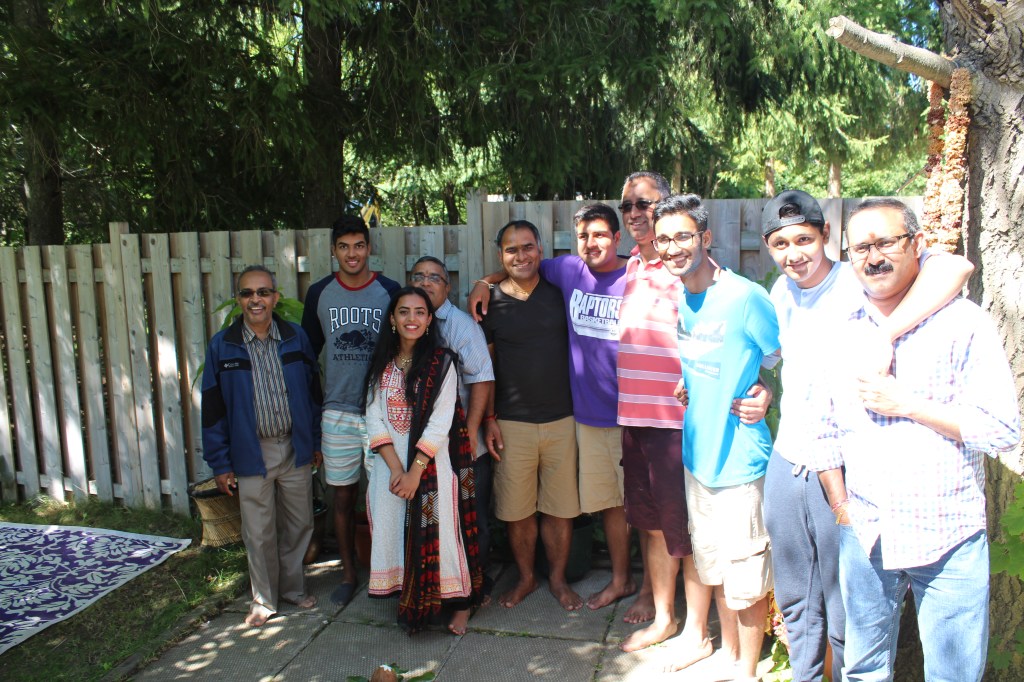
Experiences and Insights from Twenty Years of Gita Satsang – Kincardine

I would like to share some written testimonials from participants who have been enriched by Satsang in the small town of Kincardine, Canada. This would not be possible without the spirit of selfless service that flows so generously from the hearts of participants, which continues to inspire, refine and uplift the spirit and life of Self and others. I hope you enjoy and resonate with these insights from them.

  1. From Varun Tripathi: The direct translation of Satsang is truth-community. But given there is a religious connotation to its everyday use, a more apt translation would be spiritual gathering; a gathering of like-minded individuals engaging in activities that revolve around the divine, existential/moral philosophy, and devotion. Having grown up in a religious home where prayer was as routine as any other daily ritual, I’m intimately familiar with the concept. We often sat as a family to discuss everything from the purpose of prayer to the value and importance of charity.

    So it was no surprise when my parents started a weekly Satsang in Kincardine shortly after our move. Along with preserving Hindu spiritual tradition, the initiative also helped build and strengthen the bonds between members of the Indian community. But by no means was it restricted to Indians. My dad has always taken pride in educating others on the richness of our traditions and dharm. So members of the broader community from all ages and various ethnicities joined us from time to time. 

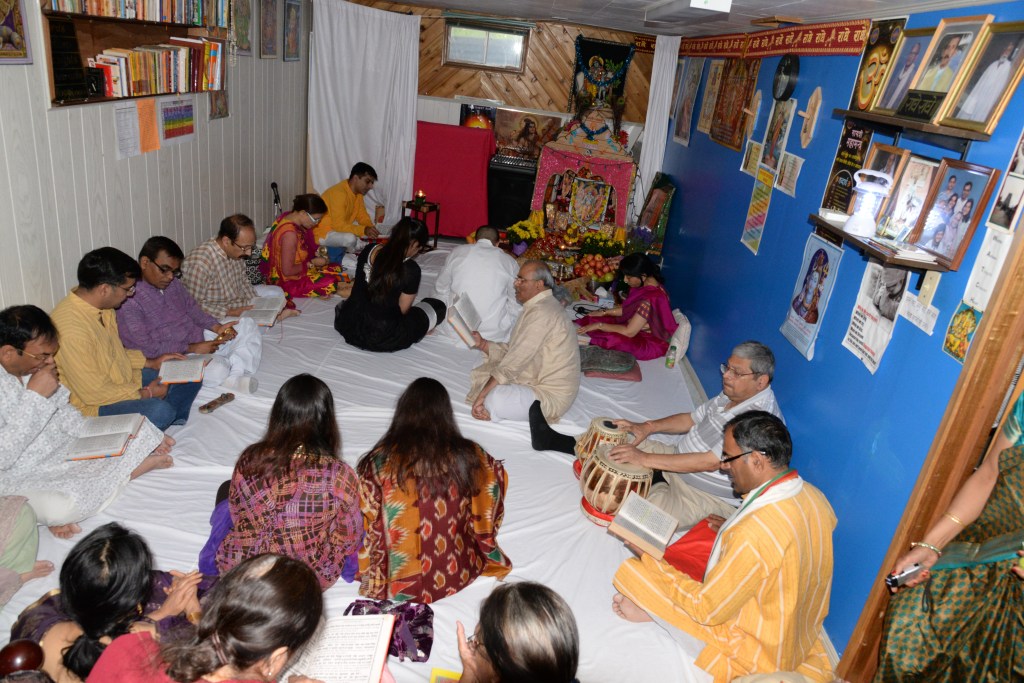
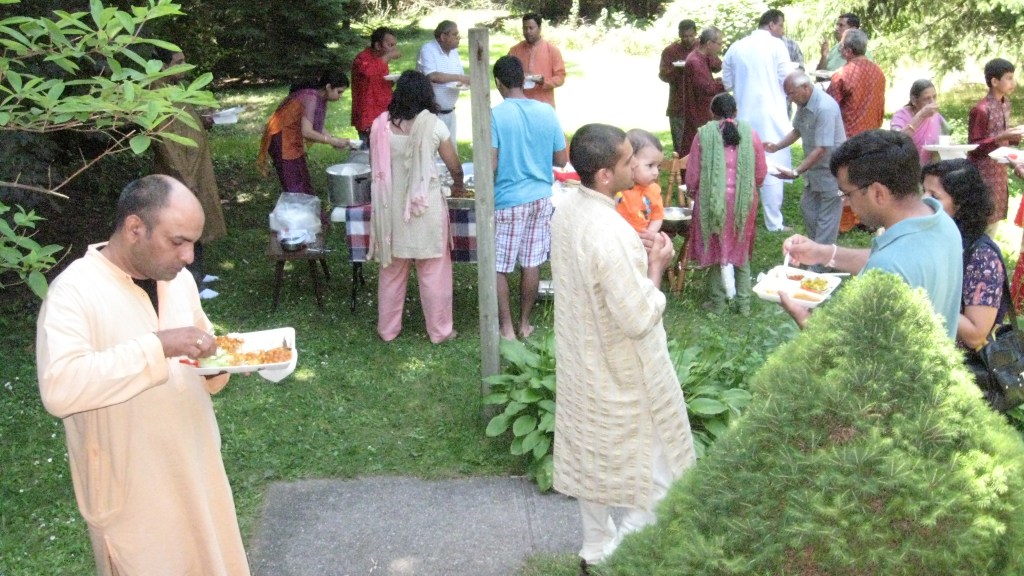
Initially, the weekly Thursday evening Satsang took place at the local ashram – a small bungalow in a wooded area just Southeast of Kincardine, owned by a Guruji who split his time between India and Canada. But the bungalow remained largely unoccupied throughout the year, so he had graciously agreed to letting us use the property for religious or cultural activities. In those early years there were weeks when each and every Indian family would attend and the large clearing adjacent to the bungalow would be filled with people stretched out in various yoga poses – we were lucky to have a trained yoga teacher in the group, so the Satsang included a breathing and mobility component. I have many fond memories of us laying on our backs after the session, surrounded by trees, breathing in the warm summer air. The more solemn part of the evening would follow, with a reading of the Gita, a discussion, and eventually, a prayer. In the winters, or when, for a given stretch, the attendee numbers would dip, the Satsang would take place at either our house or the Malhotra household. Malhotra auntie and uncle were the elders of the community. Both emanated a calm that was matched only by the pace of the town in those early 2000s. Uncle didn’t say much, but his presence alone would put you at ease. Auntie, on the other hand, would overwhelm you with her love and kindness. Theirs was a position of tenure. My parents were the honorary elders. A title they had earned through my dad’s sheer persistence of initiatives and my mom’s authenticity and warmth.  

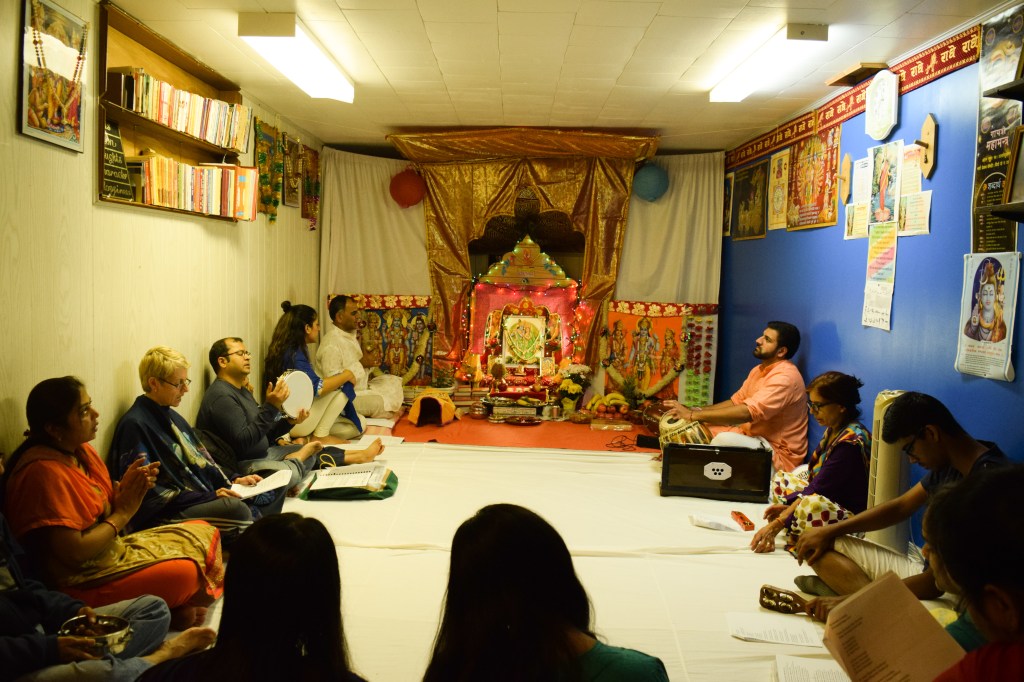
A decade or so later, when the ashram was sold off to new owners, our house became the primary location for the Satsang. It made sense from a practical standpoint – though they could fluctuate in any given week, the attendee numbers were a fraction of what they had been at the start. So, what was the sense in driving to a different location when a basement room at home would be more than sufficient? But more than that, it’s as though our home was always meant to be the ashram for the community. The prayers and bhajans, the Gita and Ramayan readings lasting 24 consecutive hours, the countless yajnas. If structured prayer and ritualistic purification represent the foundation of an ashram’s sanctity, then there is likely no better place in Kincardine to host these satsangs. 


When I was a teenager I couldn’t comprehend the value of these brief weekly gatherings. A few years in, when my parents became more hands-off and my attendance went from mandatory to voluntary, the Satsang was more like background noise. But despite my obvious lack of spiritual precociousness, the weekly Thursday evening Satsang left its mark. Reflecting back on its 20-year run it’s amazing to think how, at different times, it served so many different people. Inspiring, grounding, and maybe even sheltering them from the weight of everyday life. For me, admittedly not having used the opportunity to the extent I could, the Satsang is a reminder that building community and committing to it whole-heartedly has the power to change you and impact those around you, in ways you can’t anticipate. It’s the little things, done over long periods of time, that have the outsized influence we all want from our actions. Two hours, once a week, over 20 years (~ 2,000 hours). Truly amazing.

Varun Tripathi
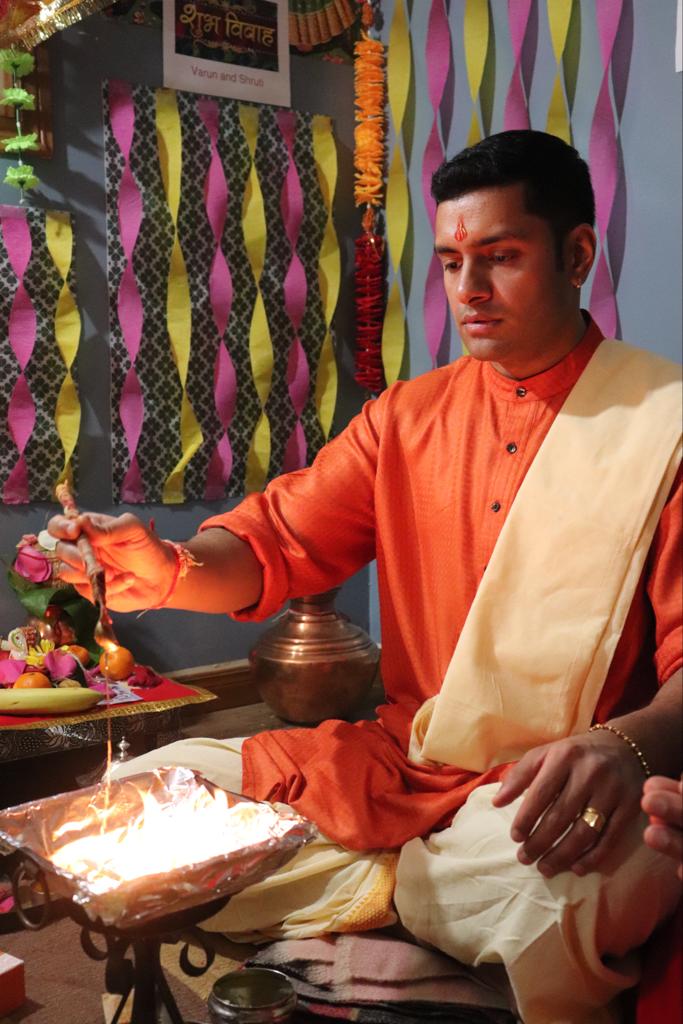
Varun Tripathi performing Hawan

2. From Joanne Dallman: I was a member of the Kincardine Satsang Group, led by Chandra Tripathi, for two and a half years (2018-2021), and during that time I not only learned a great deal, I felt as if I was included as part of the spiritual family. Once a week our group would gather to chant prayers, sing Kirtan, and study the Bhagavad Gita. In addition, I was delighted by the chance to also study the Ramayana, the Bhagavatha Vahini, and participate in a chanting course taught by a teacher in India. Being a member of the Kincardine Satsang Group opened up areas of study for me that had previously not been available.

Through my participation, I had a chance to become more adept at singing the “call and response” chants. And was challenged to not only learn some new chants but to regularly lead others in chanting. This was a very enjoyable and liberating experience, and one which gave me the confidence to lead Kirtan at the Ashram as well, when I lived there for 6 weeks in 2020.

Prior to joining the Kincardine Satsang Group, I had studied yoga for 15 years and had spent time at the Ashram participating in yoga courses and providing volunteer service in a community organized by Swamis. And even though I had been studying yoga for many years, joining the Satsang Group helped me to go much deeper into the wealth of material that is Hinduism and to admire the depth and breath of the magnificent scriptural writings and practices. I still feel as if I have only managed to “scratch the surface” of all the beautiful teachings that are Hinduism and Yoga.

I want to thank Chandra and his wife, Abhilasha, for being so gracious and inviting me into their home, weekly, to join them in their spiritual practice. They have provided me with memories that will bring me lasting joy.

Joanne Dallman (Divya)

Joanne Dolllman from Vancouver

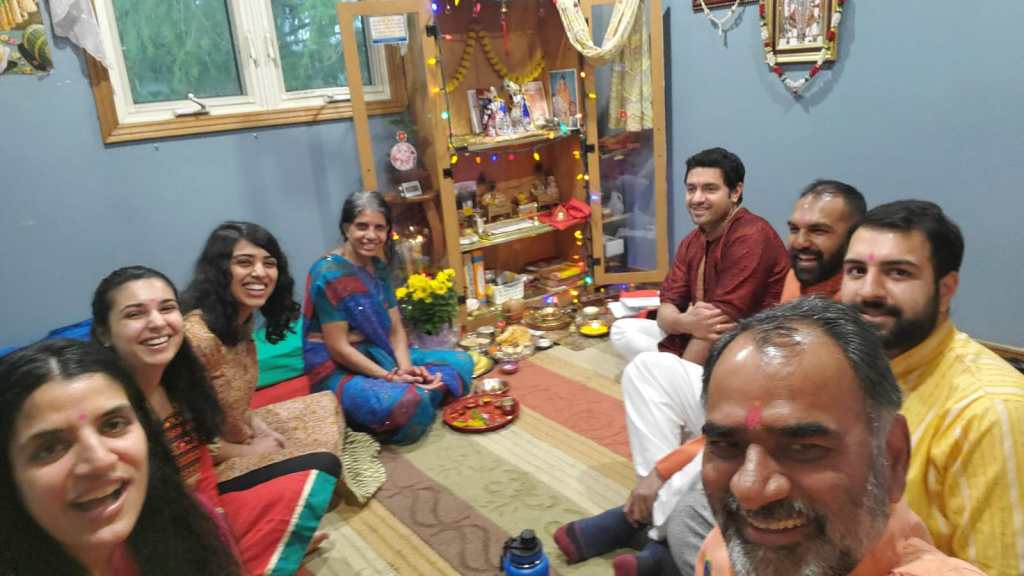
Photos at different times of Gita Satsang

Helpful Tips (Bits of Advice) for University/ College Going Students

Going to University is a privilege. Exclusively spending time for learning, developing skills and
knowledge is a special gift for a lucky one like me and you. Once you have acknowledged this rare gift, you can wisely utilize your time, resources, and efforts to achieve your goals (focussed). You might have heard that going to university is the best time in life because; never again will live mixed with youth, freedom, energy, opportunity, and resources together in this combination. During this learning phase, your wisdom, discipline, and hard work in university can help you make the most out of your life.
Be attentive and make use of the first week of the University’s socialization period, in investing in good
friendships that pay dividends forever. But always remember your ABC (Avoiding Bad Company).
Create a positive atmosphere around you that will nurture you. Here are some of the helpful hints that I
want to share with my children, and loved ones, and I hope they are of value to you as well.

  1. Academic. However you try to rationalize it, grades are important. Realize that a successful
    school career requires hard work, dedication, sacrifice and a balanced approach (Kaak Cheshta, Bako Dhyanam, Swan Nindra Tathaiwa Cha...). Make study and learning a top priority.
    a. University is a big step up and if needed, don’t be shy about getting academic help, right
    help can get you on the right track. Take advantage of all the professors, TAs, support
    workers you have at your disposal as a university student. When you e-mail a professor,
    do it respectfully and for a good reason. Group work, study sessions and other academic
    collaborations are the norm in University. Find homework/study buddies. Being study
    buddies is a two way street. Don’t be the guy that just always asks for notes & help.
    Complete your coursework smartly and in advance, don’t wait until the last minute.
    Seek advice from upper classmen. People love feeling wise.
    b. Go to class prepared enough to ask insightful questions or make useful comments. Do
    your best to attend every class session and don’t sit in the back and don’t socialize
    during classes. Turn off your cell phone and do not text during class.
    c. Few hours of quality studying beats a draining, distracted all-nighter any day.
    d. Take a draft of your essay to a TA or professor for review; once graded work has been
    handed back, go back and ask for advice on how to improve it. These people will be
    your references, advocates, and even friends later in life; you want them to remember
    your name. If your professor is giving a talk or performance, show up, and make sure he
    or she knows you did. Always remind your professor, adviser, or TA of your name when
    you encounter them; they will be eternally grateful.
    e. In each course, the instructor has a certain amount of material that must be covered,
    and students have a certain amount of work they must do. It is your responsibility to fit
    the course work into your busy life, not your instructor’s responsibility to change a
    course so that it fits your schedule. You don’t need to buy all your books right away.
    Avoid those long lines to buy books. Search and try to buy used book, online or borrow
    from Library.
    f. University is also unique opportunity to take extra enrichment classes; you’re actually
    interested in (i.e. Sanskrit, Programming, new languages, Religions, community/ social
    work, finances etc.). Take advantage of what campus life has to offer – clubs, events,
    service trips, religious groups, language classes and campus jobs. Research shows that
    students who are affiliated with a campus group are more likely to progress well.
    g. Classes are great at teaching you what’s been done and how to do things. But find your
    passion and be willing to start small and early on your own time because making ideas
    realized is a different than knowing the stuff.
  2. Temptations: Important to know that you are now in a place where alcohol, drugs and many
    illegal temptations are legally forbidden but implicitly available. The only thing that stands
    between you and a bad experience is your own good judgment and values that you have
    learned and nurtured through life. Wise are those who learn from other’s mistakes.
  3. Communications: Do not fool yourself that you are now adult and you can deal all problems
    yourself. If you have a problem, talk to your parents, who have more experience in almost every
    aspect of life. Your parents and friends are only a phone call away. If you are feeling lonely or
    homesick, you are not alone; all of the first year students around you are making the same
    adjustment. Continue to adjust but always keep your support system – friends, family in place,
    and communicate with them regularly. Communication with you will mean more to your
    parents than you think. Surround yourself with good people, the type that celebrate your
    victories, push you often, support and laugh generously.
  4. Finance: Manage money & resources wisely by careful spending and avoiding any impulse
    purchases. Keep track of your financial budget and dates when you have to pay your bills/fees.
  5. Stress: During your university life, you will encounter several challenges and changes that may
    increase your stress. But don’t let that happen and never get disappointed or think that you
    have failed. If your intentions are clear and good and you act smartly with full attention you can
    achieve anything, believe that all power is within you. Failure is only short term; if one door
    closes another door will open for you. Remember that nothing can make you unhappy, if your
    mind does not want to be unhappy. Continue to learn ways to control your mind and your
    reactions through breathing, silence, smile, walk and meditation. If you encounter negative things
    (e.g. anger, jealousy), try to balance them with good and beautiful things.
  6. Team or Group: Find groups, clubs or teams to join early, something you are passionate about.
    The earlier you meet people and find a place to belong the sooner you will enjoy school. Find a
    workout and study buddy and keep each other on track. Also, find something to hold on to
    throughout school (e.g. playing some instruments (tabala, guitar etc.), music, yoga, readings,
    going to temples, volunteerism etc.); this will help you to relax and ease your stress.
  7. Balance: Always make a balance and don’t neglect your health (physical, mental, emotional, social and spiritual). Eat well, sleep well, have fun, study hard, communicate with parents and use campus facilities to enrich your life (I learned my swimming at IIT and UofT Swimming Pools).
  8. Cleanliness and Personal Hygiene: Regularly wash your sheets and clothes, keep things
    clean and tidy around you and care for the environment around you.
  9. Social Media: You will be better off by keeping the embarrassing stuff off of Facebook/
    social media. Discipline yourself on social media usage; this is the biggest time killer.
  10. Carelessness: Don’t leave your laptop, phone or valuable unattended. Someone might steal it,
    but even worse someone might mess with your e-mail / Facebook status. Be good, feel good,
    act wisely and always spend your time and resources wisely.
  11. Self-Reliance: Don’t defeat yourself. Always give your best. I remember a moment, when a
    course seemed too hard in my Ph.D. degree at UofT, when the work ahead of me seemed too
    much, but then I decided that if I was going to be defeated by something, I was at least going to
    give it my best effort. I did not want to live with the regret that I did not succeed at something
    because I did not even give myself a fair chance to succeed. Work hard but be practical in
    your expectation to accept the outcome and choose your workload and subjects accordingly (practice to give your 100%). Having tool kits and capable of fixing things is a great way to break the ice and makes you a useful friend. Help others when needed with your skills, help friends move.
    This is also one of the most emotional times for parents, especially if their oldest or youngest child is
    going to school that is what is referred as ‘empty nest’, a difficult transition. Be calm and use this time wisely. Each child only starts university once. Therefore, this moment give us as parents an opportunity to say things to our children that will stick with them not only because of what is said, but because of when it is said. This is a time to impart your wisdom and experiences that have guided you in your life and ways that you hope they will live. As parents, we should help kids stay focused on school while balancing the rest of what life throws their way.
    It is a big transition and it takes time for youth to learn how to be a university student, how to be wise in study, how to eat on time, how to do laundry and clean their room, how to handle money and how to keep a balance in social media and achieve their goals. All that takes some time, therefore, wait with patience and try to facilitate their smooth transition with full support. Help them grow properly with their potential and provide the advice, help and encouragement when needed. Thank you.
Sharing wisdom with University going students and their parents

Celebrating our diversity in times of crises – communicate, collaborate & celebrate for strength, harmony, and peace

Currently, we are facing an unprecedented critical time with rising cases of COVID in our communities, Province, and globally, and it has added anxiety to the day-to-day lives of many. In this challenging time, cultural diversity can offer us diverse possibilities for how to take care of health (Ayurveda, yoga, and meditation), strengthen our willpower and creativity and inspire us and others. The winter holiday season is a special time of year when we commemorate especial things (meaningful in people’s life) as well as celebrate the end of the year, counting achievements and developing resolutions.

Most Canadian towns and cities are diverse and celebrate their diversity by integrating new cultures and cuisines in their celebrations. While there are many differences in the events we celebrate and how we commemorate them, they all have similar aspects of togetherness (integration of families and friends), reflection, enjoyment while keeping in mind the enlightenment, austerity, services, love, and peace to all. There are various faith-based festivals that occur during the winter season, which are celebrated in unique ways. Just a few examples of traditional holidays include: Hanukkah which is observed by Jewish families, Diwali (festival of lights) which is celebrated by Hindus, Sikhs, and Jains, Eids observed by Muslims, Christmas celebrated by Christians, and Buddhists commemorate the incarnation of Buddha, while some Aboriginal communities celebrate the Winter Solstice, African-Americans celebrate Kwanzaa, and most enjoy the spirit of New Year. Learning and respecting other cultures’ celebrations can bring us closer and make us stronger, which has become easy to explore with technological advancements and social media.

The key message is spreading love and acceptance through giving and forgiving, uniting, prospering, and helping each other. I firmly believe in my Hindu roots and recently celebrated Diwali but respect other traditions and am ready to enjoy the festivities of Christmas and the New Year. Please take time to reflect on our personal celebrations and how can we respectfully learn how others around our communities, and around the world celebrate diversity, and together we can share our similarities, this is how we can contribute towards world peace.

With this note, I wish everyone a very happy holiday season. May the supreme light of lights enlighten our understanding as we strive to attain spiritual wealth while enjoying prosperous glory on the material plane, and spreading the message of love to all, accepting people as they are. Though we all deserve to spend time with family and friends and celebrate the festivals, we have to ensure our safety and the safety of others by adhering to all public health guidelines.

 Wish you all happy holidays, and Happy New Year.

Tripathi family at their home Vrindavan in Kincardine celebrating Diwali and enjoying the spirit of the Christmas

India’s ancient city Varanasi transforms into a modern look like Kyoto, Japan

Indian Prime Minister Narendra Modi inaugurated the Kashi Vishwanath Corridor on Monday, December 13, and said that this project will provide easy access to pilgrims to offer prayers in the holy river Ganga and Lord Vishwanath which will add to Kashi’s (ancient name of Varanasi and Banaras) spiritual vibrancy. This historic project was completed in record time (33 months) that connect the various ghats to Lord Shiva’s Vishwanath Dham. This major project is one of the important projects to fulfil PM’s promises to his constituency, to turn Kashi into Kyoto, the Japanese city of temples. The other projects include water taxi in the Ganga, Rudraksha Convention Centre, Ring Road, and the modernization of various medical and old traditional industries. The modernization of water management, sewage management, waste management and urban transportation, while conserving the rich heritage of Varanasi” and its religious sentiments are considered in the refurbishment of this site.

Earlier the temple area was only 3 000 square feet, it has now extended to about 500, 000 square feet. To facilitate tourism and ensure safety, the city has also been equipped with hundreds of CCTV cameras across 720 locations. During the inauguration, PM says that “Tyrants tried to destroy Kashi, but the city is now writing a new chapter of glory”. He said that Kashi has been the “centre of spiritual consciousness”. “And, now in a grand form will add energy to this consciousness,” The current structure of the temple was constructed by Maharani Ahilyabai Holkar around 1780, and in the 19th century, Maharaja Ranjit Singh had got it crowned with a golden ‘Shikhar’. He celebrated the occasion by showering flower petals on the labourers and craftsmen during the inauguration of the temple complex and had lunch with the workers involved in construction work at a hall in the complex. Kashi is soaked in thousands of years of Sanatan Hindu culture and has seen many ups and downs. The city is a true symbol of our antiquity, traditions, faith, as well as the glory of our past. Every Hindu would like to visit Kashi and pray to Lord Shiva after a dip in the Ganga, at least once in a lifetime. I visited Kashi a few times with my parents and other family members with a recent visit were in 2019. After seeing the restoration of glory to the ancient city on TV, now it will be my first priority to visit Kashi and pay darshan to Kashi Vishwanath, feel the pride of our roots and appreciate the efforts of people involved in restoring this glory.

Har Har Mahadev.

Kincardine residents help Habitat for Humanity build homes in Cape Croker

By: Liz DadsonDecember 21, 2019

Two groups of Kincardine area residents have helped Habitat for Humanity build homes in the Cape Croker First Nation community.

For Chandra Tripathi, it was the first time he had worked on such a team and it was an amazing experience.

“When I first heard from my co-worker about the opportunity to volunteer to build homes in Cape Croker First Nation community with Habitat for Humanity, my ears jolted, recognizing a unique experience, designed to bring about true changes, rather than empty discussion,” says Tripathi.

“When the day came, I realized there were 11 volunteers from Bruce Power to finish four homes. The work included caulking, siding, cleaning, loading and unloading large appliances, and other activities to give a final finishing touch.”

Estimating a two-hour drive from his home in Kincardine, Tripathi and one of his co-workers left at 6 a.m. in order to meet the other volunteers and the building co-ordinator at the site by 8 a.m. All volunteers arrived on time, and Tripathi met one of his friends from Ripley.

The group met with the site co-ordinator who explained safety, and then assigned the work for the day.

“My focus was to make meaningful contributions as well as interact with beneficiaries of these homes, their chief and other volunteers,” says Tripathi. “During the break, I started a conversation saying Aanii (hello in Ojibway). Some of the people shared their stories with me about their current life and the life of 50 years ago.

“I saw the gratitude in one woman’s eyes. She had three children and four puppies in her car. She told me that her children and puppies will come to live with her in one of these homes.

“The chief and a few other members recognized me from working together at the Kincardine Multicultural Celebration. They said they had attended celebrations more than once in the past 16 years, since I began running this annual event. I invited them to attend the next event May 12, 2020, in Kincardine.

“At the end of the day, around 4 pm, I was not surprised to see that four homes were almost ready to be given to families before Christmas which proves the quote, ‘Many hands make light work’.

Though his muscles were sore the next day, Tripathi was happy to be part of fulfilling volunteer work that would genuinely make a difference in the community.

“I am looking forward to the next volunteer trip, so that I can solicit, a diverse cross-section of members of the cultural group in our community to join us on this deeply-rewarding, home-building journey and contribute to the community, as a way to break barriers and build the bridges,” he says. “Though I have been volunteering for more than 20 years in the areas of environment, education and diversity, this hands-on experience was different and built inclusion, trust and an abiding sense of fulfilment.

“I encourage you to consider volunteering with Habitat for Humanity and other volunteer groups.”


Chandra Tripathi (third from right), with volunteers from Bruce A Chemistry and Environment at Bruce Power at the Habitat for Humanity project in Cape Croker; photo courtesy of Chandra Tripathi

Matt Harvey and seven of his friends of Kincardine also spent a job day, earlier this month, at the Neyaashiinigmiing Reserve, Cape Croker, helping to complete homes in time for residents to move in for Christmas.

They left Kincardine at 6 a.m. in order to arrive in time for the 8 a.m. orientation. The team had a great opportunity to learn trades, such as flooring and kitchen cabinet installation. The job day was sponsored by Harvey Financial Solutions Inc. of Kincardine.


Working with Habitat for Humanity in Cape Croker, are Les Pomeroy (left), Mike Diebel, Jim Phillips, Simon Billing, Eileen Simpson, Jeff Simpson, Matt Harvey and Graham Hancock, all of Kincardine; photo courtesy of Matt Harvey